
How to Choose a Gear Motor
A practical guide to selecting the right gear motor for your application,
including motor type, power, voltage, output speed, torque and gearbox
configuration.
1. Understand Your Application Requirements
Start by analyzing your machine’s working conditions. Consider the load type, operating cycle, starting and stopping frequency, environment and installation space. These factors will determine the required motor type, power and gearbox configuration.
Load Type
Constant / Variable / Shock Load
Operating Cycle
Continuous / Intermittent
Environment
Indoor / Outdoor / Temperature / IP Rating
Installation Space
Mounting dimensions and available space
2. Choose the Right Motor Type
Select between AC or DC gear motors based on your power supply, speed control needs and application requirements. Each type has its own advantages.
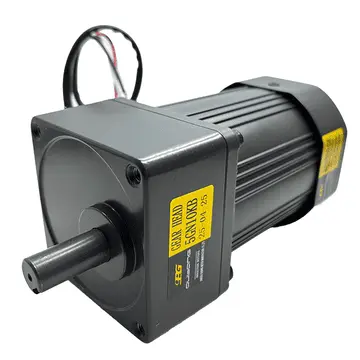
AC Gear Motors
- Widely used in industrial applications
- Stable performance and high reliability
- Available in single-phase and three-phase
- Options: fixed speed, variable speed, brake, reversible
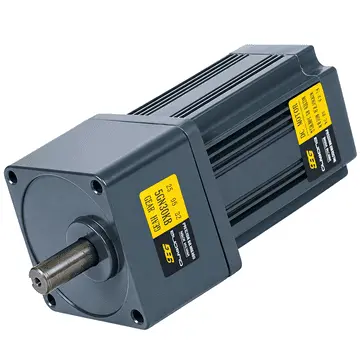
DC Gear Motors
- Compact size and high efficiency
- Suitable for battery or low-voltage systems
- Available in brushed or brushless types
- Precise speed control
3. Determine the Required Power and Torque
Calculate the required output torque and output speed based on the load, operating conditions and transmission method. When sizing the motor, also consider transmission efficiency, starting conditions and an appropriate safety factor to ensure sufficient power and torque.
4. Select the Proper Gear Ratio
The gear ratio determines the output speed and available output torque. Select a suitable reduction ratio according to the required machine speed, torque and load conditions.
5. Check Mounting Dimensions and Shaft Type
Confirm the mounting dimensions, flange size, shaft diameter and shaft type before ordering. Also check the expected radial and axial loads on the output shaft, especially when using sprockets, pulleys or belt drives. Correct dimensions and proper shaft loading help ensure reliable installation and service life.
6. Consider Additional Options
Depending on the application, additional options may be required, such as brakes, speed controllers, variable-frequency drives, encoders or special protection for high-temperature, wet or dusty environments. Applications with frequent starting, stopping or reversing may also require additional consideration.
7. Consult with a Professional Gear Motor Supplier
If you are unsure about motor power, gear ratio, mounting dimensions or gearbox selection, our technical team can help you identify a suitable gear motor based on your application requirements.
Related Guides
How to Select the Right Gear Ratio →
Need Help?
Send us your motor model, nameplate photo, voltage, installation dimensions or application requirements. Our team can help you identify a suitable motor and gearbox solution.
Download Resources
Need a Custom Solution?
Share your application requirements. Our engineers can help you select a suitable gear motor and gearbox solution.